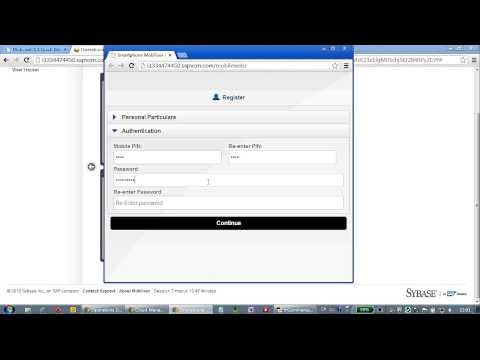
As we know, since SUP 2.1.3, iOS devices rely ultralite db (sql anywhere) to do synchronization with SUP cdb. Here is a useful article of how to open this database and inspect the content. It is often needed for developers to check the status and make troubleshooting of synchronization.
Reference
Wednesday, October 31, 2012

Tuesday, October 30, 2012
Thursday, October 25, 2012
High Level Steps of Android Native Development on SUP
Here is the high level steps of android native development on SUP.
1. Generate Java Object API code. Be sure to use android.jar file with the correct level of SDK API
2. Create Android Project in Eclipse withe the correct level of Android SDK API and add the objectAPI library jar files into the build path.
3. Copy the generated code into the project source folder
4. Change the Android Manifest xml file and add the activity class.
5. Create User Interfaces, and java classes.
6. Run and test the application in the emulator with the correct version of OS.
The steps are based on SUP 2.1.3 version.
Tips:
1. If you use the sample code from the documentation, be sure to check the registration part, make sure to use correct server name, port, application id, username and password. Also change the mbo names to make the application run with no errors.
2. Make sure to generate, create and test the application in the same android api version.
3. Make sure the automatic registration is enabled on the target application in SCC.
4. Make sure the Java Compiler version is 1.6
Reference
Troubleshooting
Troubleshooting 2
1. Generate Java Object API code. Be sure to use android.jar file with the correct level of SDK API
2. Create Android Project in Eclipse withe the correct level of Android SDK API and add the objectAPI library jar files into the build path.
3. Copy the generated code into the project source folder
4. Change the Android Manifest xml file and add the activity class.
5. Create User Interfaces, and java classes.
6. Run and test the application in the emulator with the correct version of OS.
The steps are based on SUP 2.1.3 version.
Tips:
1. If you use the sample code from the documentation, be sure to check the registration part, make sure to use correct server name, port, application id, username and password. Also change the mbo names to make the application run with no errors.
2. Make sure to generate, create and test the application in the same android api version.
3. Make sure the automatic registration is enabled on the target application in SCC.
4. Make sure the Java Compiler version is 1.6
Reference
Troubleshooting
Troubleshooting 2
Tuesday, October 23, 2012
How Sencha is integrated with SAP
During this initial phase of the partnership, SAP worked with Sencha to create a custom JavaScript library for Sencha Touch that allows a Sencha Touch application to work with an oData producer such as the SAP NetWeaver Gateway. Sencha Touch already provides web applications with data management capabilities through its Models, Stores and Proxies; this additional capability simply allows a Sencha Touch application to more seamlessly consume oData from an SAP data source.
This library will be developer community supported and available free of charge from Sencha.
Reference
This library will be developer community supported and available free of charge from Sencha.
Reference
How PhoneGap is integrated with SAP
Through this partnership, SAP will be enhancing its existing HWC to include support for the PhoneGap JavaScript API. What this means is that existing PhoneGap applications can be migrated over to the SAP Mobile Platform HWC and run without modification. Then, when updated versions of the application become available, they can be deployed into the container remotely using the management and provisioning capabilities of the SAP Mobile Platform. To make use of the secure, reliable synchronization capabilities of the SAP Mobile Platform, the existing PhoneGap application will need to be updated to access its data through the MBO. While this is extra work that must be done by a developer, one of the primary reasons you would move an existing application onto the SAP Mobile Platform and the HWC is to take advantage of the MBO, so it’s time well spent.
Reference
Reference
How to install and configure SAP Mobile CRM
Here is the high level steps of installation and configuration of SAP Mobile CRM
1. Mobile CRM add-on installed on SAP CRM backend
2. Mobile CRM add-on installed on SAP ERP backend (optional for enabling ordering functions)
3. Deployed on SUP 2.1 and later.
4. Client software is installed on mobile devices.
Use SIMGH transaction to do custom configuration.
Reference Basic Tutorial Recording
1. Mobile CRM add-on installed on SAP CRM backend
2. Mobile CRM add-on installed on SAP ERP backend (optional for enabling ordering functions)
3. Deployed on SUP 2.1 and later.
4. Client software is installed on mobile devices.
Use SIMGH transaction to do custom configuration.
Reference Basic Tutorial Recording
Monday, October 22, 2012
What is the components of Syclo Platform
There are four major components of Syclo Agentry Platform.
1. Agentry Server. Manages the communication between backend and devices and server-side functions.
2. Agentry Editor. Eclipse-based developement IDE.
3. Agentry Test Environment. Desktop-based test client to view object, emulate supported platforms or do debugging.
4. Agentry Client. Secure client installed on devices, consists of application definitions and master data.
Reference
1. Agentry Server. Manages the communication between backend and devices and server-side functions.
2. Agentry Editor. Eclipse-based developement IDE.
3. Agentry Test Environment. Desktop-based test client to view object, emulate supported platforms or do debugging.
4. Agentry Client. Secure client installed on devices, consists of application definitions and master data.
Reference
What is Syclo's portfolio
 Syclo has four major products released in the SAP Portfolio at the moment of writing this article.
1. Work Manager for SAP ERP - Mobile Enterprise Asset Management
2. Service Manager for SAP CRM - Mobile Field Service
3. Inventory Manager for SAP ERP - Mobile Inventory Management
4. Rounds for SAP ERP - Mobile Reading
Reference
Who is Syclo
Since 1995, Syclo has worked with over 600 organizations to create, deploy and manage a variety of mobile applications. Syclo’s software extends corporate systems and databases to a wide range of mobile devices and user types, helping companies cut costs, increase productivity and make better decisions across the board. Together, Syclo’s technology and prebuilt SMART Mobile Suite applications present a flexible, reliable and cost-effective framework for enabling the mobile enterprise.
This acquisition is the next step in delivering a fully-integrated mobile platform and enterprise application portfolio to both Syclo and SAP customers,” Syclo CEO Rich Padula said.Reference
Subscribe to:
Posts (Atom)